
Do You Need a Permit for a Water Heater, Window, Deck, Patio Cover, or Fence in San Diego?
By Clint / Published October 29, 2026

Short answer: it depends on the project, the size, where your property sits, and in some cases how old your house is. Here’s the quick-reference table, then a breakdown of each project type with the specific thresholds the city uses.
If your project is in the Coastal Zone (any part of Ocean Beach, Mission Beach, parts of Point Loma, Pacific Beach, La Jolla, or other coastal areas), in a historic district, or in a Very High Fire Hazard Severity Zone, assume you need a permit regardless of what the standard rules say. The overlays override most exemptions.
Quick-reference table
| Project | Permit required? | Threshold that triggers a permit |
|---|---|---|
| Water heater replacement | Yes, always | Any replacement, even like-for-like |
| Window replacement | Usually not | Enlarging the opening, structural changes, or any work in a coastal/historic area |
| Deck | Depends | Over 200 sq ft, OR more than 30″ above grade, OR serves an exit door |
| Patio cover | Depends | Over 300 sq ft, OR more than one story, OR over 12 ft tall, OR inside setbacks |
| Fence | Depends | Over 7 ft tall, OR over 6 ft in a front setback, OR over 3 ft in a visibility area |
| Anything in Coastal Zone, historic district, or VHFHSZ | Yes, almost always | Overlay rules override standard exemptions |
Water heater: permit required, always

San Diego requires a permit for every water heater replacement — including swapping an old tank for an identical new one. This surprises most homeowners because it feels like a basic appliance swap. It isn’t, legally.
The permit covers four things the city wants verified at inspection:
- Seismic strapping — two straps, upper and lower third of the tank, correctly anchored
- Temperature and pressure relief (TPR) valve — correct size, correct discharge piping routed to an approved termination
- Combustion air and venting — for gas units, correct draft, correct clearances, no backdrafting
- Earthquake-rated flexible connectors — for both water and gas supply lines
A plumber or licensed GC pulls the permit (or the homeowner, if they’re the owner-builder). The inspection typically happens within a few days of installation.
Common gotchas:
- A tankless conversion requires additional permits (gas line resizing, condensate pump electrical, venting changes)
- Garage installations need an 18″ platform under the burner for gas units — keeps the pilot above potential fuel vapors
- A heat pump water heater usually needs a dedicated electrical circuit, which adds an electrical permit
What happens if you skip it: your insurer may deny a water damage claim (“the installation wasn’t permitted or inspected”), and at resale the buyer’s inspector will flag it. Both outcomes cost more than the permit did.
Windows: usually no permit — unless you change the opening
If you’re replacing a window with another window of the same size and type, no permit is required. The city treats it as maintenance.
A permit IS required when any of these are true:
- You’re enlarging or shrinking the opening (new header, new framing)
- You’re adding a window where one didn’t exist (cutting a new opening)
- The work involves structural changes (removing a wall section, modifying a load path)
- The window serves as egress for a bedroom and the replacement doesn’t meet current egress requirements (20″ wide × 24″ high, 5.7 sq ft of opening)
- The home is in a historic district — exterior changes almost always need review
California Title 24 energy code still applies when replacing windows: new units must meet current U-factor and SHGC requirements, even without a permit. A reputable installer handles this automatically with NFRC-rated units.
Common gotcha — egress bedroom windows. If your 1950s bedroom has a window smaller than today’s 5.7 sq ft minimum, replacing it with another small unit perpetuates a code violation. A code-compliant replacement may require enlarging the opening — which then triggers a permit.
Decks: three thresholds, any one triggers a permit
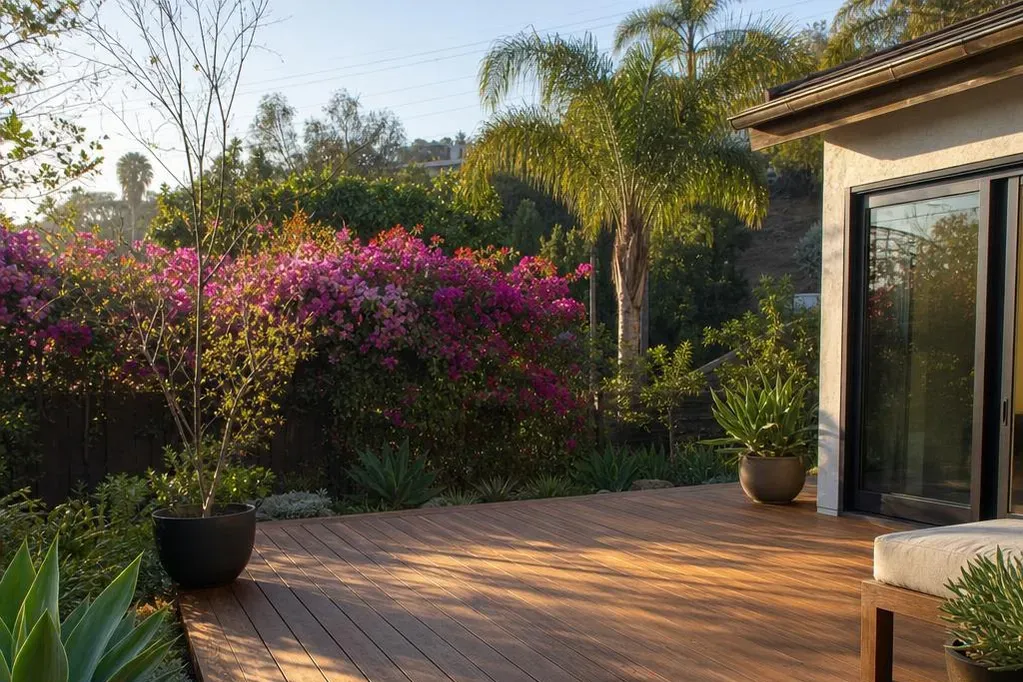
A deck is exempt from permit requirements only if all three of these are true:
- It’s 200 square feet or less
- It’s no more than 30 inches above grade at any point
- It doesn’t serve a required exit door (meaning the deck isn’t the egress path from a bedroom or primary exit)
Cross any of those thresholds and you need a permit.
Common scenarios:
- Small backyard patio deck, 10′ × 15′, ground-level → 150 sq ft, under 30″ → exempt
- Second-story deck off a bedroom → serves egress → permit required
- Pool deck wrapping around the house → almost certainly over 200 sq ft → permit required
- Any deck in the Coastal Zone → permit required regardless of size
What the permit covers: structural (footings, posts, joists, ledger attachment to the house), guardrail and handrail compliance, waterproofing where attached to the house, flashing. All of these are where DIY decks fail — and where failures become serious injuries.
Materials and permit interaction: different decking materials have the same permit requirements, but the material you choose matters a lot for how long the deck survives in San Diego’s coastal climate. Salt air eats galvanized hardware long before it hurts the boards, so near-coast decks need stainless hardware regardless of what the boards are made of.
Patio covers: four thresholds, any one triggers a permit
A patio cover is exempt only if all four of these are true:
- It’s 300 square feet or less
- It’s one story
- It’s no more than 12 feet in height
- It sits outside the required setbacks for your zone
Cross any threshold and you need a permit.
Most patio covers people actually want end up triggering at least one threshold. A standard 20′ × 20′ pergola over an outdoor dining area is 400 sq ft — permit required. A cover with recessed can lights or a ceiling fan picks up an electrical permit on top of the structural one.
Open vs. solid roof: both count toward the 300 sq ft threshold. A “shade structure” with slats or lattice is still a patio cover for permit purposes.
Coastal Zone: patio covers in the Coastal Zone usually require a Coastal Development Permit on top of the standard building permit, regardless of size. More on how coastal rules affect San Diego remodels.
Fences: three height limits depending on where on the lot
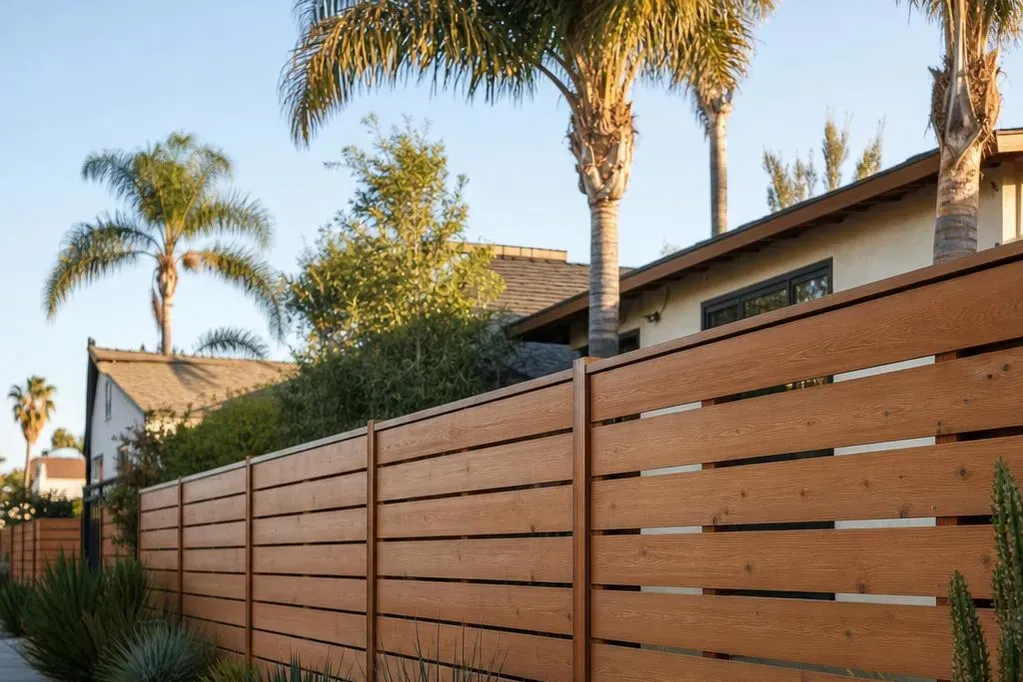
Fences in San Diego follow a sliding scale based on location on your lot:
- Side and rear yard: up to 7 feet tall, no permit required
- Front setback area: up to 6 feet tall, no permit
- Visibility areas (within 25 feet of a driveway or corner, or anywhere obstructing sight lines for traffic): 3 feet maximum, no permit
Over any of those limits, you need a permit.
Common gotchas:
- Many lots have front setbacks of 15 to 25 feet. A 6-ft fence pushed to the sidewalk likely violates the setback rule.
- “Visibility triangles” at corners and driveways are stricter than most homeowners expect. A 6-ft hedge or fence that blocks a driver’s view of a pedestrian can be ordered removed.
- Retaining walls are counted differently. A 3-ft retaining wall with a 4-ft fence on top is treated as a 7-ft structure, which triggers a permit.
- Pool fences have their own code (CRC Appendix V and local amendments) — minimum 60″ tall, self-closing gates, no gaps a 4″ sphere can pass through.
The exceptions that override everything
Three overlays in San Diego override the standard exemptions. If your property is in any of them, assume you need a permit for essentially any exterior work:
Coastal Zone. The California Coastal Act applies to much of San Diego’s beach communities — all of Ocean Beach, Mission Beach, parts of Point Loma, Pacific Beach, La Jolla, and others. Standard exempt projects (small decks, patio covers, fence replacement) often still require a Coastal Development Permit here. The 2025 city ADU reforms, for example, don’t yet apply in the coastal zone pending Coastal Commission certification.
Historic districts. Mission Hills, North Park (Dryden), South Park, Burlingame, Golden Hill, and other designated historic districts require Historic Resources Board review for exterior changes. Standard exemptions mostly don’t apply. Even a window replacement or a fence can trigger review if the change is visible from a public right-of-way.
Very High Fire Hazard Severity Zone (VHFHSZ). Rancho Peñasquitos, Scripps Ranch, parts of San Carlos, Alpine, and other wildland-urban interface areas. Chapter 7A of the California Building Code requires ignition-resistant materials for additions and some replacements — eaves, vents, decking, siding — that go beyond standard permit requirements.
Not sure if your property falls into any of these? San Diego Development Services’ permit lookup map shows overlay zones by address. Takes two minutes.
What happens if you skip the permit
The three real consequences for homeowners:
- Code enforcement. A neighbor complaint, a satellite image flag, or a sale triggers a case. Fines start modest but escalate quickly for repeat or willful violations. If an unlicensed person does the work for you, SB 779 raised the statewide minimum fine for unlicensed contracting to $1,500 as of July 2026 — one more reason to confirm your contractor’s CSLB status.
- Insurance claim denial. The most common one. A water damage claim gets denied because the water heater wasn’t permitted. A fire claim gets reduced because the electrical work contributed. Insurers routinely request permit history when claims are filed.
- Resale friction. Buyer’s inspector finds the unpermitted deck. Buyer’s lender demands it be permitted or removed before close. The seller eats the cost — and the time — right when they’re trying to move.
There’s also a fourth consequence for homeowners who’ve inherited unpermitted work from a prior owner: legalizing an unpermitted ADU or garage conversion under AB 2533 is now easier than it used to be, but still requires a permit application and corrections to meet current habitability code.
What to do first
If you’re planning a project and genuinely aren’t sure whether it needs a permit, don’t guess. Two options:
- Check the city’s “When Is a Permit Required” bulletin. It’s a plain-English guide to common residential projects. Available at sandiego.gov → Development Services → Information Bulletins.
- Have a licensed GC walk the project before you start. Thirty minutes on-site clears up what’s exempt, what needs a permit, and what overlays apply to your lot. Clint and the team at Craftsman Pacific do these walkthroughs as part of our standard bid process. Request a walkthrough through our quote form.
The cost of pulling a permit is almost always smaller than the cost of fixing an unpermitted project at resale, defending a code enforcement notice, or losing an insurance claim.
This article is homeowner education, not legal advice. Specific property situations vary — if you have an open enforcement case or complex ownership questions, consult a California real estate attorney before proceeding.